
Executive Summary
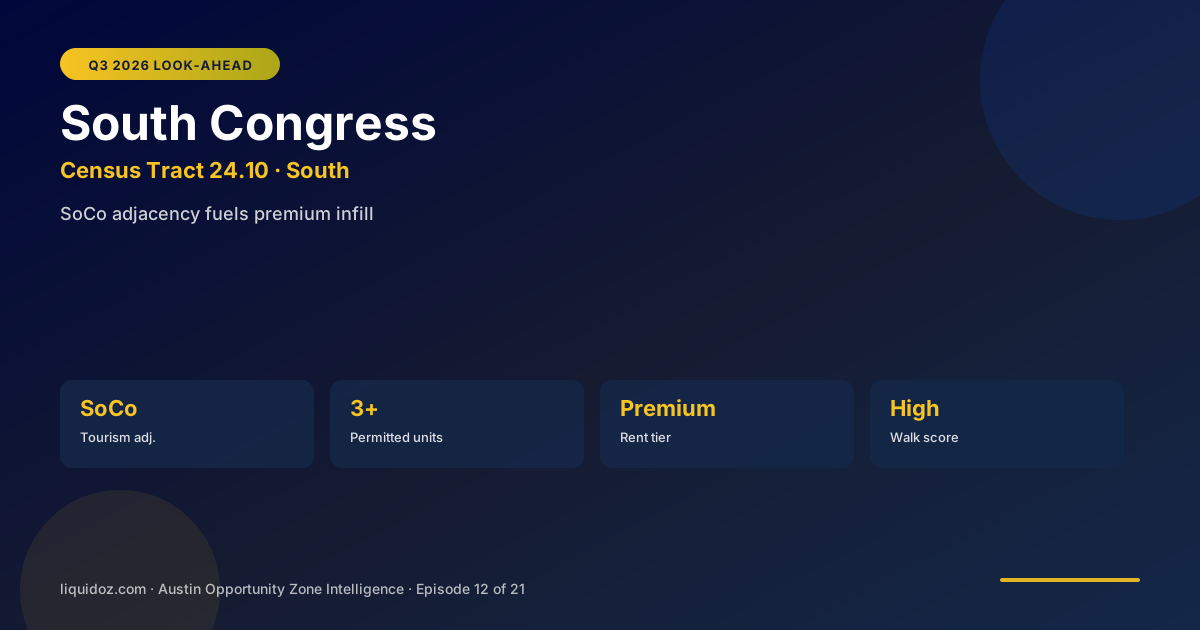
South Congress OZ tracts benefit from tourism, entertainment employment, and durable demand for walkable urban product — even as interest rates constrain luxury condo starts.
Liquid's SoCo Residences (78704) sits adjacent to this corridor with permitted three-unit infill.
This report is part of Liquid's Q3 2026 Austin OZ Look-Ahead — a 21-part editorial series covering every designated Opportunity Zone census tract on our Austin OZ map. Each installment is designed for investors, developers, and advisors tracking tax-advantaged capital deployment across Central Texas.
Tract at a Glance
| Attribute | Detail |
|---|---|
| Census Tract | 24.10 |
| Region | South |
| ZIP Codes | 78704, 78745 |
| Corridors | South Congress, Stassney, I-35 |
| Series | Q3 2026 · Episode 12/21 |
Changing Business Landscape
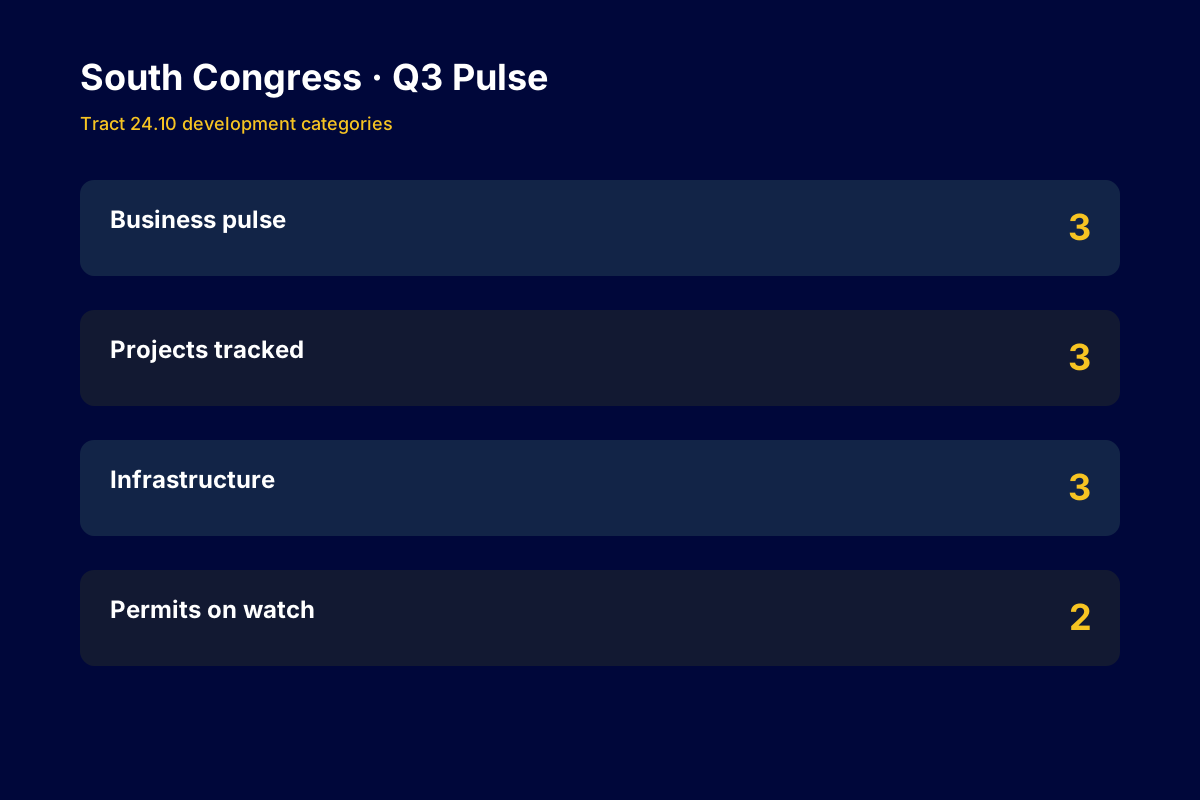
South Congress (Census Tract 24.10) continues to see storefront turnover, service-sector expansion, and owner-operator investment along South Congress, Stassney, I-35. For Opportunity Zone investors, operating business activity signals renter demand, daytime population, and potential commercial adjacency to residential projects.
The following businesses and business categories are on our Q3 watch list based on corridor drives, permit filings, and community feedback. This is not an exhaustive directory — it highlights momentum relevant to real estate underwriting.
- South Congress Avenue retailers (Retail / Tourism) — Iconic Austin strip driving regional brand value.
- Live music venues (Entertainment) — Nightlife economy supporting service-worker housing demand.
- Boutique hotels (Hospitality) — Short-term stay competition with long-term rental stock.
Neighborhood-serving retail and food establishments often lead residential reinvestment cycles in Austin OZ tracts. When local operators expand hours, add second locations, or invest in build-outs, it typically precedes multifamily lease-up and single-family rent growth within a half-mile radius.
Real Estate & Development Pipeline
Ground-up housing, subdivision entitlements, and value-add repositioning define the Q3 development story in South Congress. Austin's Land Development Code reforms and bonus density programs continue to reshape feasibility for small infill sites — especially where utilities, alley access, or flag-lot configurations unlock additional units.
| Project / Site | Status | Q3 Notes |
|---|---|---|
| SoCo Residences (107 W Johanna area) | Permitted — construction | Three-unit infill with rooftop decks; bond-financed. |
| Stassney infill duplexes | Active | High-end finishes targeting professional renters. |
| Mixed-use SoCo adjacency | Planning | MF-4 and commercial mixes on corner lots. |
Liquid active project exposure in this tract includes soco residences. Review our projects page for construction milestones and investor materials.
Developers are prioritizing product types with proven lease velocity: four-bedroom single-family rentals, cottage courts, and small multifamily where parking and drainage constraints allow. Capital stacks mix QOF equity, construction debt, and occasionally city-affiliated affordability tools where projects qualify.
Infrastructure & Mobility
Transportation and utility investments often precede land price appreciation in Opportunity Zones. South Congress sits along South Congress and Stassney and I-35, linking residents to employment centers, Austin-Bergstrom International Airport, downtown, and suburban job nodes.
- South Congress mobility study (City active) — Pedestrian safety and transit priority lanes.
- Stassney corridor improvements (Design) — Connecting SoCo to residential tracts south.
- Drainage in Zilker watershed fringe (Ongoing) — Floodplain constraints on select parcels.
Investors should monitor TxDOT timelines, CapMetro service changes, and City of Austin Watershed Protection / Austin Energy upgrades that can trigger replats or delay vertical construction. Q3 2026 is a critical window for projects requiring dry-season site work or late-summer certificate of occupancy targets.
Community & Neighborhood Character
SoCo character preservation debates intensify as infill adds density behind the main strip.
Short-term rental regulation affects investor pro formas on nearby residential streets.
Strong civic participation from business guilds and neighborhood associations.
Authentic community engagement — neighborhood associations, nonprofit operators, and cultural institutions — remains a leading indicator of long-term stability in Austin OZ tracts. Developers who co-design with residents typically encounter smoother entitlements and stronger market acceptance at lease-up.
Schools & Education
School quality and enrollment trends influence owner-occupier demand, corporate relocation decisions, and rental household composition. South Congress is served by campuses in AISD with varying capital improvement schedules.
| Campus | District | Q3 Relevance |
|---|---|---|
| Travis Heights Elementary | AISD | Desirable central south elementary. |
| Fulmore Middle School | AISD | Central feeder campus. |
| Travis High School | AISD | Large comprehensive high school. |
Watch for bond-funded modernization projects, portable classroom additions, and attendance zone adjustments that can shift neighborhood desirability within a single academic year.
Retail, Industrial & Anchor Tenants
Anchor retailers, industrial users, and mixed-use employers stabilize tax bases and provide daytime traffic for local services. In South Congress, 2 major retail or industrial nodes are tracked this quarter.
| Name | Type | Q3 Notes |
|---|---|---|
| South Congress merchant district | Retail | Primary regional draw. |
| Stassney light industrial fringe | Industrial | Transition zones to residential. |
Permits & Entitlements Tracker
City of Austin Development Services, Travis County, and utility districts issue the approvals that convert OZ capital into shovel-ready sites. The following permit and entitlement items are active or expected in Q3 2026 for Tract 24.10.
| Description | Agency | Status |
|---|---|---|
| SoCo Residences building permits | City of Austin DSD | Issued |
| Density bonus applications | City of Austin DSD | Select filings |
Track ATX Permit & Development Center dashboards, Austin Build + Connect filings, and subdivision replat dockets for late-breaking updates. Entitlement delays remain the primary schedule risk for ground-up OZ projects citywide.
How to Track Permits This Quarter
Use the City of Austin ATX Permit & Development Center portal to filter by zip code 78704 and surrounding areas. Save searches for site plan, subdivision, and building permit types. For Travis County fringe parcels in South Congress, monitor county commissioner agenda items for replats and utility districts.
Set calendar reminders for Austin Planning Commission and City Council land use hearings — compatibility standards, density bonuses, and parking reforms can materially change unit counts on entitled sites before vertical construction begins.
Q3 Watch List
Our editorial team will update this post as new filings and announcements emerge. Priority monitors for South Congress:
- STR ordinance enforcement patterns
- SoCo retail vacancy and rent resets post-tourism peak
- Construction lending terms for boutique infill
Q3 2026 Austin Market Context
Austin's Opportunity Zone program enters Q3 2026 with permanent federal authorization under OBBBA, redesigned deferral mechanics, and ongoing Treasury guidance on zone redesignation. For South Congress, that macro backdrop matters because tax-advantaged equity competes with conventional multifamily debt, build-to-rent portfolios, and private credit strategies for the same institutional allocator attention.
Metro-level indicators — job growth, single-family permit counts, apartment lease-up, and commercial vacancy — still favor southeast and east corridors where land basis remains below central Austin peaks. Tract 24.10 specifically benefits from South Congress, Stassney, I-35 access, which links residents and workers to major employment nodes without assuming downtown-centric commute patterns.
Liquid monitors Austin Board of Realtors statistics, CoStar submarket reports, and City of Austin Development Services permit dashboards weekly. This look-ahead translates those signals into tract-specific monitors so QOF LPs and direct co-investors can align hold periods, capital calls, and tax planning with local reality rather than national averages alone.
Demographics & Housing Fundamentals
Opportunity Zone designation reflects economic distress metrics at the time of nomination — but current demographics are dynamic. South Congress spans ZIP codes 78704, 78745 with a mix of renter and owner households, age cohorts, and income levels that determine product type (SFR, duplex, townhome, or small multifamily).
Visit the South Congress tract profile for census charts and ArcGIS context. Compare adjacent tracts in this series to understand spillover effects: improvement in one census tract often precedes rent growth and land price movement in neighboring tracts within the same corridor.
Underwriting tip for Q3: triangulate census data with utility activations, school enrollment reports, and mobile-device foot traffic near major employers. Demographic averages hide block-level variation — especially in OZ tracts with industrial-residential mixes or greenfield fringe development.
Q3 Investor Checklist for This Tract
Before deploying capital into South Congress, confirm the property or fund asset sits within Census Tract 24.10 on the current Treasury OZ map. Request geolocation verification from sponsors — polygon overlays from the Liquid OZ map help validate addresses near tract boundaries.
Review entitlement status, environmental constraints, and floodplain flags on each target site. Q3 dry-season work windows favor horizontal infrastructure; delayed utilities can push vertical starts into Q4 and affect 2026 tax planning for gain deferral elections.
Schedule calls with Liquid's team to compare QOF II equity, bond offerings, and project-level co-investment where available. Bring CPA-prepared gain schedules, hold-period objectives, and liquidity requirements so outreach is substantive.
Subscribe to city agenda alerts for South Congress and bookmark this post — we will refresh key permit and infrastructure items as new public filings appear during the quarter.
Key Takeaways for Q3 2026
Census tract 24.10 (South Congress) enters the quarter with distinct development signals. Investors underwriting Austin OZ exposure here should weight the following themes:
- Infrastructure and corridor investment along South Congress, Stassney, I-35 shapes commute access and land values.
- Residential pipelines — subdivisions, townhomes, and multifamily lease-up — drive near-term rent comps and absorption assumptions.
- School enrollment, retail anchors, and neighborhood services indicate household demand stability beyond raw permit counts.
- STR ordinance enforcement patterns
- SoCo retail vacancy and rent resets post-tourism peak
Liquid updates this look-ahead as public filings and announcements emerge. Bookmark the post and review companion resources on our OZ map and projects page when evaluating fund or direct co-investment options.
Investment Implications for OZ Investors
South Congress OZ tracts benefit from tourism, entertainment employment, and durable demand for walkable urban product — even as interest rates constrain luxury condo starts. Liquid's SoCo Residences (78704) sits adjacent to this corridor with permitted three-unit infill. Opportunity Zone investors allocating through a qualified fund should confirm tract eligibility with current Treasury maps, evaluate hold-period alignment with QOF compliance tests, and stress-test rents against construction timelines delayed by infrastructure or permitting.
Liquid publishes tract-level research so accredited investors can compare neighborhoods before reviewing offering documents. Explore the official tract profile, our interactive OZ map, and adjacent tracts in this series for corridor context.
This article is educational and not an offer to sell securities. Consult your CPA and attorney regarding Opportunity Zone deferral, OBBBA rule changes, and suitability of private fund investments.
Related Resources
On Liquid
- South Congress tract profile
- Austin Opportunity Zone map
- All 21 OZ tracts
- Q3 2026 OZ Look-Ahead series hub
- Liquid project: soco residences
- Adjacent tract
- Adjacent tract
External Sources
Frequently Asked Questions
- What makes South Congress an Opportunity Zone?
- South Congress (Census Tract 24.10) was nominated by Texas and certified by the U.S. Treasury as a Qualified Opportunity Zone under the 2017 Tax Cuts and Jobs Act. Investors who deploy eligible capital gains into qualified funds investing in the tract may access federal OZ tax benefits subject to IRS rules and hold periods.
- What should investors watch in South Congress during Q3 2026?
- Priority monitors include entitlement filings with the City of Austin, corridor infrastructure timelines, major retail or industrial anchors, school capital projects, and multifamily or single-family pipelines along South Congress and Stassney and I-35. This look-ahead consolidates those signals for tract-level underwriting.
- Does Liquid have projects in South Congress?
- Yes. Liquid tracks active development at soco residences within or adjacent to this tract. Visit liquidoz.com/projects or contact our team for investor materials.
- How does this series relate to the Austin OZ map?
- Each article corresponds to one census tract on Liquid's interactive map at liquidoz.com/map. Use the series hub at liquidoz.com/news/series/q3-2026-oz-lookahead to navigate all 21 Q3 2026 look-ahead reports.
- Is this investment advice?
- No. These reports are educational market intelligence. Securities offerings, if any, are made only through formal offering documents to accredited investors. Consult your tax and legal advisors before investing.